

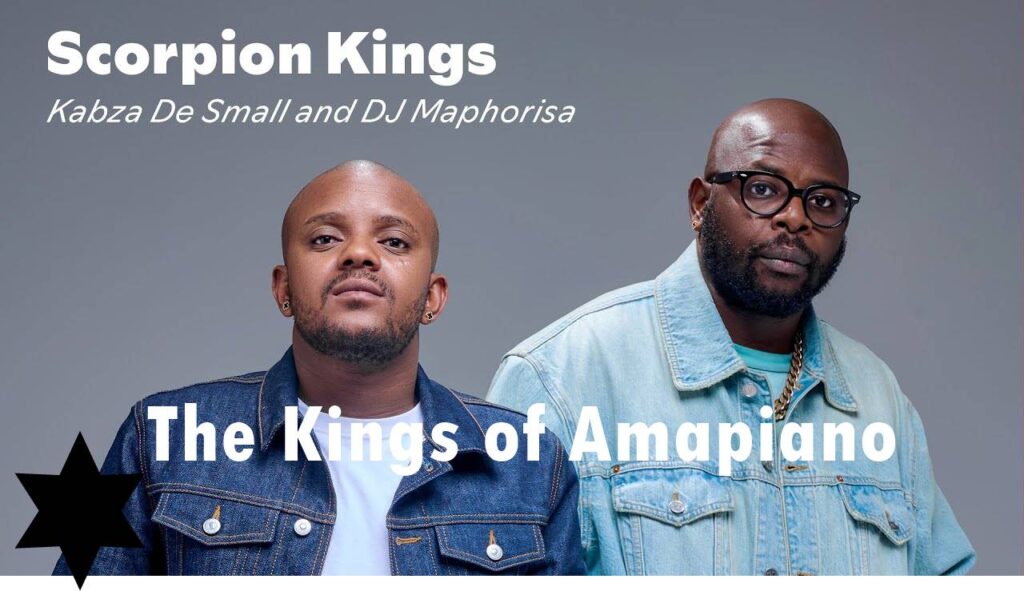
The Scorpion Kings—the powerhouse duo of DJ Maphorisa and Kabza De Small—have been the undisputed architects of the Amapiano movement. Their sound has defined a generation, transforming a township groove into a global phenomenon. But as they prepare to make history with a record-breaking concert at Johannesburg’s FNB Stadium, a question lingers on the lips of fans and industry insiders alike: Are we witnessing the end of an era for the Scorpion Kings?
This is not a question of their relevance, but one of evolution. The duo’s journey, from the diamond-selling Scorpion Kings LP in 2019 to the colossal Scorpion Kings Live at FNB event in September 2026, reveals a story of constant reinvention, culminating in a question about their future sound and direction.
They are not just performing; they are curating a cultural movement. And that movement, much like the genre they helped pioneer, is in a state of constant flux.
The Architects of a Sound: A Look Back
To understand where the Scorpion Kings are going, it is essential to appreciate where they have been. DJ Maphorisa and Kabza De Small, often referred to as the “King of Amapiano” for Kabza De Small’s pivotal role, didn’t just stumble upon success; they engineered it. Their 2019 collaborative album, Scorpion Kings, is widely credited with playing a major role in popularizing the genre beyond its niche.
They didn’t just make music; they defined the template. Hits like the recently released LoMhlaba and Phumelela continue to showcase their signature blend of airy synth pads, bright piano melodies, and deep basslines. But their recent output suggests a desire to push beyond these established boundaries, hinting at a sound that is more expansive and, some argue, less purely “Amapiano.”
From Loftus to FNB: The Spectacle as a Statement
The sheer scale of their upcoming Scorpion Kings Live at FNB Stadium on 19 September 2026 is a powerful statement. After selling out 70,000 tickets in a record-breaking seven days, with over 500,000 people in online queues, they have proven their immense commercial power.
Last year’s show at Loftus Versfeld Stadium in Pretoria was described as a landmark moment—a cultural convergence of music, fashion, and community. This year, they are aiming for an even grander spectacle: a “Broadway musical, a Cirque du Soleil, and a rock show, all rolled into one,” according to their creative director.
This evolution from DJs to curators of a massive, multi-sensory experience is a fundamental shift. They are no longer just musicians; they are impresarios of a cultural empire, defining how Amapiano is presented to the world.
Key Milestones in Their Journey
To visualize this transformation, it helps to look at the key milestones of their career:
2019: Scorpion Kings LP released, solidifying their sound and popularizing Amapiano.
2025: Scorpion Kings Live [with Friends] at Loftus Versfeld Stadium – a landmark concert for the genre.
2026: Multiple high-profile festival appearances, including ULTRA South Africa’s Groove Room and the Cape Town International Jazz Festival, showcasing their ability to cross musical boundaries.
September 2026: Scorpion Kings Live at FNB Stadium – sold out 70,000+ tickets in one week. This is not just a concert; it’s a definitive statement of their cultural dominance.
Their involvement in events like the Cape Town International Jazz Festival is particularly telling. Describing the festival as “more than a festival, it is a cultural movement,” the Scorpion Kings see their sound as part of a continuum, connecting the legacy of jazz to the innovation of Amapiano. This is a clear move to cement their legacy as serious, genre-transcending artists.
What Does “Evolution” Mean for Their Sound?
The signs of change are visible. While they continue to release chart-topping Amapiano tracks, their recent collaborations and festival placements point toward a more diverse sonic palette.
Their set at the ULTRA South Africa’s Groove Room, which celebrates African dance music, places them alongside Afro-house and Gqom artists. This reflects a broader trend where the “King of Amapiano” and his partner are being embraced by the wider electronic music world. This evolution could be seen as “genre-fluid.”
However, their forays into other sounds do not necessarily signal an abandonment of Amapiano, but an expansion of its definition. As they stated about the Jazz Festival, “You can hear how everything connects. Every generation adds something new.” This is a mature, historical perspective on the evolution of music.
ALSO CHECK: DJ Karri Biography: South African Amapiano DJ & Record Producer
Conclusion: The End of an Era or the Start of a New One?
So, are we witnessing the end of an era? If we define an “era” as the time when the Scorpion Kings were solely and definitively the “Kings of Amapiano,” then yes, perhaps that era is drawing to a close. The duo is evolving from genre-specific hitmakers to global cultural figures. Their legacy is no longer just a collection of songs but a moment in history, a movement that changed the face of South African music.
They are evolving into cultural icons whose influence will be felt for generations, even as their own sound continues to shift and grow. The FNB Stadium show is not a finale; it is an ambitious step into the next chapter of their already legendary careers. We are witnessing the end of one era, and the beginning of another, far grander one—a time where the Scorpion Kings will be remembered not just as the masters of Amapiano, but as the pioneers who helped define a global sound.
Scorpion Kings Live at FNB takes place on 19 September 2026 at FNB Stadium, Johannesburg.
What do you think? Are the Scorpion Kings evolving, or are we truly seeing the end of an era? Share your thoughts in the comments below and stay tuned to Fakaza HipHopza for more Amapiano news and insights.