

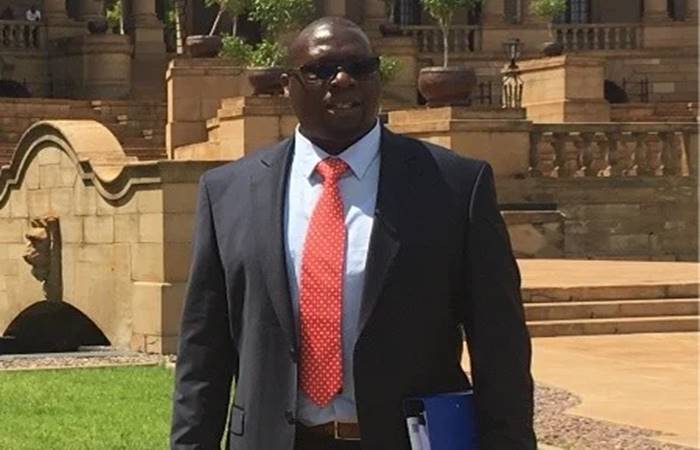
Thandazani Griffiths Madonsela SC has emerged as a central figure in South Africa’s political landscape in 2026 after being recommended as the chief evidence leader for Parliament’s Section 89 impeachment inquiry into President Cyril Ramaphosa. The senior counsel from the Durban bar finds himself at the heart of a constitutional battle that has drawn national and international attention.
Personal Information
Full name: Thandazani Griffiths Madonsela
Title: Senior Counsel (SC)
Nationality: South African
Occupation: Advocate, Senior Counsel
Based at: Durban Bar
Early Life and Education
Details about Thandazani Madonsela’s early life and educational background are not extensively documented in public records. However, his rise to the position of Senior Counsel indicates a distinguished legal career built on years of study and practice. He is based at the Durban Bar, one of South Africa’s established legal institutions.
Legal Career
Madonsela has established himself as a respected Senior Counsel in South Africa’s legal community. His career has included significant constitutional and parliamentary law work that brought him to national attention.
Judicial Service Commission Appointment
In 2022, Madonsela was appointed by President Cyril Ramaphosa as his personal appointee to the Judicial Service Commission (JSC). However, shortly after the interviews for the position of Chief Justice in 2022, Ramaphosa removed Madonsela from this position. This removal has become a point of contention, with the president later citing it as a potential conflict of interest in Madonsela’s proposed appointment to the impeachment inquiry.
Work for the African National Congress
In June and July 2026, Madonsela was briefed by a firm of attorneys representing the African National Congress (ANC) to provide legal input on parliamentary rules governing Section 89 impeachment proceedings. His work included:
- Providing legal input on the constitutionality and parliamentary soundness of proposed rules for Section 89 inquiries
- Advising on amendments to the National Assembly’s presidential impeachment rules following the Constitutional Court’s judgment in the Economic Freedom Fighters matter
- Working with another advocate on a written opinion concerning whether members of the impeachment committee could lawfully be subjected to a “fit and proper” requirement
The opinion was finalised on 2 July 2026, and the ANC later relied on it in its submission on the committee’s draft terms of reference.
The Phala Phala Impeachment Inquiry
In August 2026, Madonsela became the subject of intense public and political scrutiny when Parliament’s Section 89 Impeachment Committee recommended him as the chief evidence leader for the inquiry into the burglary at President Cyril Ramaphosa’s Phala Phala farm.
The Committee Vote
On 5 August 2026, the committee voted 9 to 7 in favour of recommending Madonsela for the position, with 11 members, including the ANC representatives, abstaining from the vote. He beat Advocate Kate Hofmeyr SC, who was nominated by the Democratic Alliance and had previously represented Ramaphosa personally.
Committee chairperson Makashule Gana announced Madonsela as the recommended candidate, stating: “The name that will be recommended will be Adv Madonsela; ours is to recommend, Parliament will do the appointment”.
ANC’s Disclosure
Following the committee vote, ANC Secretary-General Fikile Mbalula disclosed that Madonsela had previously worked for the governing party on legal questions directly connected to Parliament’s Section 89 impeachment process.
Mbalula wrote in a letter to National Assembly Speaker Thoko Didiza: “The African National Congress holds the knowledge and holds the privilege. Having satisfied ourselves that the senior counsel recommended on 5 August 2026 is the senior counsel briefed on our instruction in June and July 2026, we consider ourselves obliged to say so, in writing and on the record, while the process remains open”.
Despite placing the relationship on Parliament’s record, the ANC stopped short of questioning Madonsela’s suitability for the position. “The movement does not impugn the integrity or the independence of Adv Madonsela SC,” Mbalula stated.
President Ramaphosa’s Objection
On 18 August 2026, President Cyril Ramaphosa formally objected to Madonsela’s appointment in a letter to Parliament. Ramaphosa raised two separate conflicts of interest:
First Conflict: The removal from the Judicial Service Commission. Ramaphosa argued that “there is a reasonable apprehension that Advocate Madonsela, SC, may harbour a sense of grievance towards me and that he may act upon it”.
Second Conflict: The legal advice provided to the ANC. Ramaphosa stated: “Ordinarily a legal practitioner ought not to act in a matter that is substantially the same as one in which he or she previously advised a former client who is involved in that matter”.
Ramaphosa argued that Madonsela “may possess prior insight into issues relevant to the inquiry which any other evidence leader, approaching the matter de novo, would not have”.
Opposition Reaction
Opposition parties accused Ramaphosa of employing delaying tactics to avoid accountability. EFF leader Julius Malema said: “He is not going to choose his own judge, that’s what he is doing. Typical [of] him, he is trying to find another way to delay this process. We are not going to allow that”.
ActionSA chief whip Lerato Ngobeni said South Africans should take note that the president was hiding from accountability. ATM MP Vuyo Zungula said: “It is to be expected that the president will not subject himself to this process, a constitutional process of holding him accountable. It is a delaying tactic”.
MKP parliamentary leader John Hlophe said: “A president who has nothing to hide should not be using all these delaying tactics. He is doing that in an attempt to avoid the inevitable. South Africans [have] a right to know what happened at Phala Phala”.
Committee Response
Committee chairperson Makashule Gana confirmed receipt of Ramaphosa’s letter and indicated that the committee would seek legal advice on the matter. He stated: “We are currently studying the contents and consulting with legal services to see the options available to us in terms of how best to respond to this. We would like to have an evidence leader appointed and confirmed as soon as possible”.
Gana also asked the committee to allow legal services to consider the matter, saying he did not feel he had time to fully consider the letter. He noted: “One of the worst mistakes we can make as a committee is to believe the work we do is beyond scrutiny”.
The committee voted to obtain a legal opinion on the matter, with only the MKP and EFF opposing.
ALSO CHECK: Da Muziqal Chef Biography: South African Amapiano Producer & DJ
Points
- Senior Counsel: Thandazani Madonsela SC is a respected advocate based at the Durban Bar
- 2022 JSC Appointment: Appointed by President Ramaphosa to the Judicial Service Commission but removed shortly after
- 2026 ANC Work: Provided legal advice to the ANC on Section 89 impeachment rules in June-July 2026
- Impeachment Committee Vote: Recommended as evidence leader with 9 votes to 7 on 5 August 2026
- President’s Objection: Ramaphosa formally objected on 18 August citing conflicts of interest
- Opposition Accusations: Parties accuse Ramaphosa of using delaying tactics
- Legal Opinion: Committee voted to seek legal advice on the matter
Conclusion
Thandazani Madonsela SC finds himself at the centre of a significant constitutional moment in South Africa. His recommendation as the chief evidence leader for the Phala Phala impeachment inquiry has triggered a political and legal battle that raises fundamental questions about conflicts of interest, accountability, and the separation of powers.
Whether Madonsela ultimately assumes the role of evidence leader will be determined by Parliament’s consideration of the president’s objections and the committee’s legal advice. What remains clear is that Madonsela’s professional history, including his previous work for the ANC and his removal from the JSC, has placed him squarely in the middle of one of South Africa’s most consequential political debates in recent years.
As the committee continues its work, the nation watches to see how this constitutional drama will unfold and whether Madonsela will play a defining role in the accountability process.