

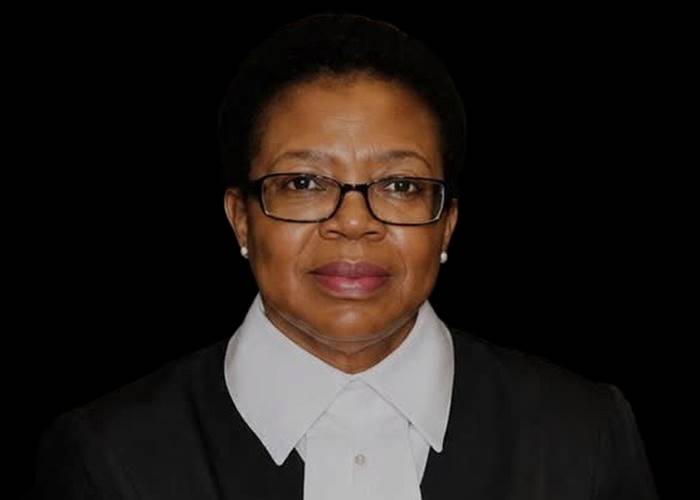
Justice Fikile Eunice Mokgohloa was a South African judge of the Supreme Court of Appeal whose remarkable legal career spanned more than three decades. Born on 1 June 1961 in Pretoria, she rose from humble beginnings in the rural area of Winterveld to become one of the country’s most respected judicial officers. Her passing on 20 August 2026 at the age of 65 marked the end of an era for the South African judiciary.
Justice Mokgohloa left behind a judicial legacy marked by intellectual rigour, diligence, independence, and an unwavering commitment to the administration of justice. She was widely regarded as an accomplished jurist who served with dignity, discipline, and a deep sense of responsibility to the law.
Personal Information
Full name: Fikile Eunice Mokgohloa
Date of birth: 1 June 1961
Place of birth: Pretoria, Transvaal (now Gauteng), South Africa
Grew up in: Winterveld, rural area near Pretoria
Date of death: 20 August 2026
Age at death: 65
Nationality: South African
Occupation: Judge, Supreme Court of Appeal
Years active in judiciary: 2006 to 2026
Children: One child
Early Life and Education
Fikile Eunice Mokgohloa was born on 1 June 1961 in Pretoria, in the former Transvaal province. She grew up in the rural area of Winterveld, a community near Pretoria that shaped her understanding of the challenges faced by ordinary South Africans.
After completing her matriculation, Mokgohloa pursued higher education at the University of the North West. She demonstrated exceptional academic ability, earning a B Juris degree in 1987 followed by an LLB degree in 1990. Her legal education laid the foundation for a career that would see her rise through the ranks of South Africa’s judiciary.
Justice Mokgohloa was a mother of one child, balancing her demanding legal career with family responsibilities.
Legal Career: From Attorney to Judge
Justice Mokgohloa entered the legal profession as a candidate attorney in 1990, working at Tshegofatso Monama Attorneys until 1993. She then moved to Hack, Stupel & Ross Attorneys, where she served as a professional assistant from 1993 to 1995 before becoming a partner at the firm from 1996 to 1999.
In January 2000, she took a significant step forward by becoming a partner at her own firm, Mokgohloa Attorneys. During this period, she also gained valuable judicial experience by serving as an acting regional magistrate in Bafokeng from July to August 2001, and as an acting district magistrate in Brits from June to July 2002. She continued serving as an acting district magistrate in Odi from July 2005 to February 2006.
Rise Through the Judiciary
Justice Mokgohloa began her judicial career in June 2006 when she was appointed as an acting judge in the Northern Cape Division of the High Court. Her performance during this period was impressive, and she continued in this role until June 2008.
In November 2008, she was appointed as a permanent judge of the KwaZulu-Natal Division of the High Court, a position she held until January 2016. Her judgments during this period demonstrated her commitment to protecting the rights of vulnerable South Africans.
Landmark Evictions Judgment
In 2015, while sitting in the Durban High Court, Justice Mokgohloa delivered a landmark judgment that halted thousands of evictions. She struck down a temporary court order that was being used by the MEC for Human Settlements and the eThekwini Municipality to evict thousands of poor people from informal settlements in Durban.
The MEC claimed the order was only to prevent land invasions, but the Socio-Economic Rights Institute (SERI), representing the shack dwellers’ movement Abahlali baseMjondolo, argued it was an “eviction order in disguise.” Mokgohloa agreed with SERI, ruling that eviction was governed by the Prevention of Illegal Eviction from and Unlawful Occupation of Land Act and section 26(3) of the Constitution. The processes prescribed by these instruments had to be followed before evictions could take place.
The court affirmed that the act and the Constitution were intended to respect the dignity of the poor and ensure that alternative accommodation was provided where needed. The judgment was widely praised for protecting the rights of vulnerable communities and reinforcing constitutional protections against unlawful evictions.
Deputy Judge President of Limpopo
In January 2016, Justice Mokgohloa was transferred to the Limpopo Division of the High Court and appointed as Deputy Judge President of that division, a position she held from 1 July 2016. During this period, she also served in an acting capacity in the Supreme Court of Appeal (SCA), gaining valuable experience at the appellate level.
She served as an acting judge in the SCA in June-November 2017, June-November 2018, and December 2018-March 2019, demonstrating her suitability for appointment to the country’s highest appellate court.
Appointment to the Supreme Court of Appeal
In June 2019, President Cyril Ramaphosa appointed Justice Mokgohloa to the Supreme Court of Appeal following a recommendation by the Judicial Service Commission. Her appointment was part of an important period of renewal and transformation of the appellate bench.
At the SCA, she made a substantial contribution to South African jurisprudence. Her judgments reflected careful engagement with the law, the facts, and the constitutional principles that underpin the administration of justice.
Notable Cases at the Supreme Court of Appeal
Drone Fishing Judgment (2026): Justice Mokgohloa wrote a significant ruling confirming that drone fishing remains illegal in South Africa. She rejected arguments that once a fishing permit was issued, anglers were free to use any method not specifically prohibited. She ruled that anglers were only authorised to fish manually, excluding the use of remote-controlled motorised equipment such as drones.
Medical Negligence Case (2025): In a compassionate judgment, Justice Mokgohloa ordered the Eastern Cape Health MEC to pay damages to a mother whose child suffered cerebral palsy due to hospital negligence. The SCA overturned a decision of the Mthatha High Court, with Mokgohloa finding that hospital staff failed to properly monitor the mother during labour, leading to the child’s brain injury.
Organic Wine Labeling Case (2019): Justice Mokgohloa ruled on a dispute between organic winemakers, determining that a wine producer’s claim that their wine was “no longer organic” was not false because there was no acceptable certification that it met the new European standard for organic wine.
Criminal Justice Cases: She presided over numerous criminal appeals, carefully considering the rights of accused persons and the interests of justice. Her rulings reflected a balanced approach to criminal justice.
ALSO CHECK: Da Muziqal Chef Biography: South African Amapiano Producer & DJ
Leadership and Legacy
Justice Mokgohloa contributed to the leadership of the Supreme Court and acted as the Deputy President of the SCA in 2024. Her leadership qualities were recognised by her peers, and she was respected for her intellectual rigour and commitment to justice.
Chief Justice Mandisa Maya, on behalf of the judiciary, expressed profound sadness at Mokgohloa’s passing. “The Judiciary has lost a valued colleague and an accomplished jurist. Justice Mokgohloa served with dignity, discipline and a deep sense of responsibility to the law,” Maya said.
“Her judicial record stands as part of the enduring contribution she made to the development of South African law.”
The Ministry of Justice and Correctional Services described her passing as a profound loss to the judiciary, the legal profession, and the people of South Africa.
Death and Legacy
Justice Fikile Mokgohloa passed away on 20 August 2026 after a long illness. She was 65 years old. President Cyril Ramaphosa declared a Special Official Funeral Category 2 for her, with the funeral service held at Hillsong Church in Wonderboom, Pretoria, on 29 August 2026.
President Ramaphosa paid tribute to her contribution to the judiciary and jurisprudence, saying: “Judge Mokgohloa has left us at the pinnacle of her commitment to the rule of law and the administration of our courts. Her legacy is entrenched in the many landmark judgments she delivered and in her exceptional judicial leadership. May her soul rest in peace.”
The National Flag was flown at half-mast at all flag stations across the country as a mark of respect.
Justice Mokgohloa leaves behind a judicial legacy that will continue to inspire generations of legal practitioners and judges. Her commitment to the rule of law, her intellectual rigour, and her dedication to justice have left an indelible mark on South Africa’s legal landscape.
She is survived by her child and family, as well as countless colleagues and members of the legal profession who were inspired by her example. As the nation mourns her passing, her landmark judgments and exceptional leadership will serve as a lasting testament to her contribution to the development of South African law.