

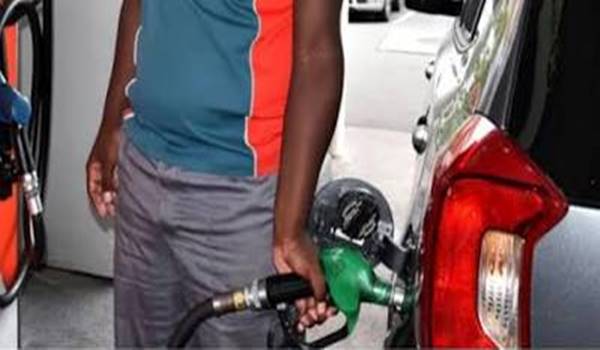
South African motorists are facing yet another punishing fuel price increase, with petrol rising by R1.34 per litre and diesel by up to R3.15 per litre from September 2, 2026. The latest hike comes as the ongoing conflict between the United States and Iran continues to drive global oil prices higher, adding further strain to already stretched household budgets.
This increase means Gauteng motorists will now pay R26.76 for a litre of 93 unleaded and R26.92 for 95 unleaded, while coastal drivers will pay R26.05 for 95 unleaded. The wholesale price of diesel has climbed to R29.11 inland and R28.23 at the coast for 500ppm, with 50ppm costing R30.05 and R28.79 respectively.
The Real Cost of Fuel Price Increases
The impact of these fuel price hikes goes far beyond the pump. For a 70-litre diesel fill-up in a bakkie, motorists will pay an extra R205 to R220 from Wednesday. Those with small petrol cars can expect R40 more for a 30-litre refuel, while a 50 or 60-litre tank in a larger vehicle will carry a premium of R67 to R80.
Families living on minimum wage are already struggling to make ends meet before these latest increases. According to the Pietermaritzburg Economic Justice and Dignity Group, a worker on minimum wage earning R4,836.80 in August had only R1,653.35 left after taxi fares and electricity. With that money needing to feed a family of four, each person would only get R413.34 for the entire month – 48% short of the government’s minimum food requirement of R855 per person.
Why Are Fuel Prices Rising?
The primary driver behind these fuel price increases is the escalating conflict in the Middle East. The war between the United States and Iran has disrupted oil supply routes, particularly through the critical Strait of Hormuz.
Brent crude oil prices have surged to around $97 per barrel, with oil prices now 50% higher than at the start of the year. South Africa’s fuel imports have cost an additional R56 billion since February, making this the single largest and most sustained oil price shock since the 1990 Gulf War.
The price of diesel has been particularly hard hit due to higher demand and reduced supply from the Persian Gulf region. For the September increase, diesel rose by nearly R3 per litre while petrol increased by R1.34.
October 2026: Another Fuel Price Hike on the Horizon
Worse news is on the horizon. Early data from the Central Energy Fund (CEF) indicates that another significant fuel price hike is building for October 2026.
Projections for October 7, 2026 suggest petrol could increase by approximately R1.87 to R1.99 per litre, while diesel could rise by R2.16 to R2.41 per litre.
If these projections materialize, Gauteng motorists could be paying R28.63 for 93 unleaded and R28.91 for 95 unleaded, with 500ppm diesel wholesale prices reaching R31.27 per litre. These prices would push fuel costs to near-record highs, though still below the peaks seen in May and June 2026.
Calls for Government Intervention
The steep fuel price increases have sparked urgent calls for government intervention. COSATU and Build One South Africa (BOSA) are demanding temporary fuel levy relief and reforms to the Road Accident Fund (RAF).
Currently, the General Fuel Levy is R4.10 per litre on petrol and R3.93 on diesel, while the RAF levy adds R2.25 per litre – meaning taxes and levies account for roughly one-third of the fuel price.
COSATU parliamentary coordinator Matthew Parks said workers, commuters, and the economy could not continue absorbing repeated fuel price shocks and called on the government to reintroduce fuel levy relief until prices returned to pre-war levels.
Economist Dawie Roodt and developmental economist Professor Dumisani Jantjies both acknowledged that while levy relief treats the symptoms rather than the cause, it remains worth considering. Jantjies argued for a rules-based fuel price stabilisation mechanism with a defined trigger, level of relief, and maximum duration.
ALSO CHECK: Pensioners Demand R5,000 SASSA Grant: ‘R2,400 is Not Enough to Survive’
Impact on Inflation and Interest Rates
The persistent fuel price increases are expected to push consumer inflation higher, which could prompt the South African Reserve Bank to hike interest rates again.
Nedbank economists noted that producer price inflation (PPI) jumped from 4.8% in April to 7.8% in May, with the sharp increase in fuel costs being the largest contributor. The year-on-year increase in petrol prices surged from 8.6% to 28.1%, while diesel rose from 33.8% to 66.7%.
The South African Reserve Bank has already hiked interest rates in response to the oil price shock, and another 25 basis point increase may be on the cards at the upcoming Monetary Policy Committee meeting.
Notes
- September 2026 Increases: Petrol up R1.34/l, diesel up R2.94-R3.15/l from September 2
- New Fuel Prices: 95 unleaded now R26.92 inland, R26.05 at coast; diesel wholesale R29.11 inland
- October Forecast: Petrol could rise by ~R2/l, diesel by ~R2.50/l from October 7
- Oil Price Surge: Brent crude at $97/barrel due to US-Iran conflict and Strait of Hormuz disruption
- Import Costs: SA has spent an extra R56 billion on fuel imports since February
- Inflation Risk: Fuel price increases may force Reserve Bank to hike interest rates again
Conclusion
The sustained fuel price increases in South Africa reflect a perfect storm of global geopolitical tensions, supply chain disruptions, and a weakening economic environment. With another hike expected in October 2026 and no immediate resolution to the Middle East conflict in sight, South African motorists and households face a prolonged period of high fuel costs. The government faces mounting pressure to provide relief, but any intervention must balance the needs of consumers with the fiscal realities of a constrained national budget. For now, South Africans must brace themselves for continued pain at the pumps and the ripple effects that will follow through the broader economy.